
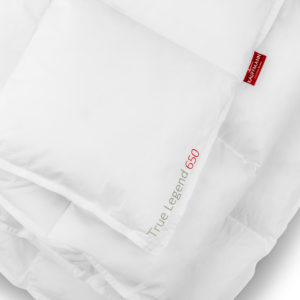
An important aspect of evaluating a comforter or pillow is the quality of the ticking. The ticking is the shell of a comforter or pillow. Its quality largely determines the comfort you experience.
It is important that the ticking is made of a light and dense fabric, so that the down or feathers cannot seep through. In addition, a quality ticking makes for a lighter comforter.
The ticking quality depends largely on the material it is made of and the number of threads used. The ticking is usually made of cotton, but it can also be made of silk. Find out which type of ticking suits you.
The influence of the material on the ticking quality
.Because almost every ticking nowadays is made of cotton, we will only focus on the cotton ticking in this article.
Of course, like every human being, you need a good night’s sleep, and you are consciously looking for the best of the best. We only supply high quality comforters, and each and every one of them is made of cotton.
To give you an idea about quality standards regarding cotton in general; the quality of the cotton is indicated by NM. The letters N and M stand for number metric. In other words, the number of meters of yarn used for a certain weight. The longer the yarn, the higher the quality.

There are basically three different types of ticking used. These are:
- The percale ticking
- The Mako-batist ticking
- The Satin-woven ticking
The Maco-batist ticking, on the other hand, consists of yarns with values starting at Nm 135. Besides Perkal and Maco-batist ticking, there is another variant, namely special satin woven ticking. Satin woven ticking consists of very finely woven yarns, and is purely in the way of weaving a combination of Perkal and Maco-batist ticking.
| Team designation | Nm- value | Priced duvet | |
|---|---|---|---|
| Perkal | 70 to 100 | Good | € 195 |
| Downbeat | 135 | Very good | € 269 |
| Fine downbatist | 150 | Excellent | €319 |
| Edelbatist | 170 | Excellent | €399 |
| Nanobatist | 200 | Excellent | – |
| Premium downbatist | 250 | Sublime | €499 |
The parkal cover
.Perkal ticking is a simple and traditional weave, consisting of yarns between Nm 60 and Nm 100. Whereby the front and back look the same.
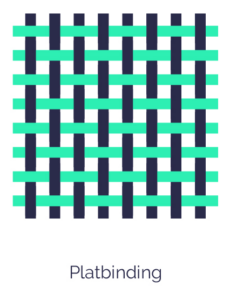
The Mako-batiste ticking
The mako-batist ticking is woven in the same way as the percale ticking. However, the threads are a lot finer (at least 130 Nm).
The satin weave
.With a satin weave, the bindings cross each other 1 in 4 times. This gives the ticking a smooth appearance and is much denser in structure compared to the binding of a percale ticking.
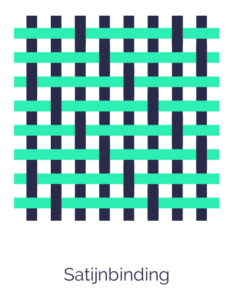
Source: http://technotheek.utwente.nl/wiki/Weven
Others also read


